Harvard Pl, Chilliwack, BC
V2P 7Z5, Canada
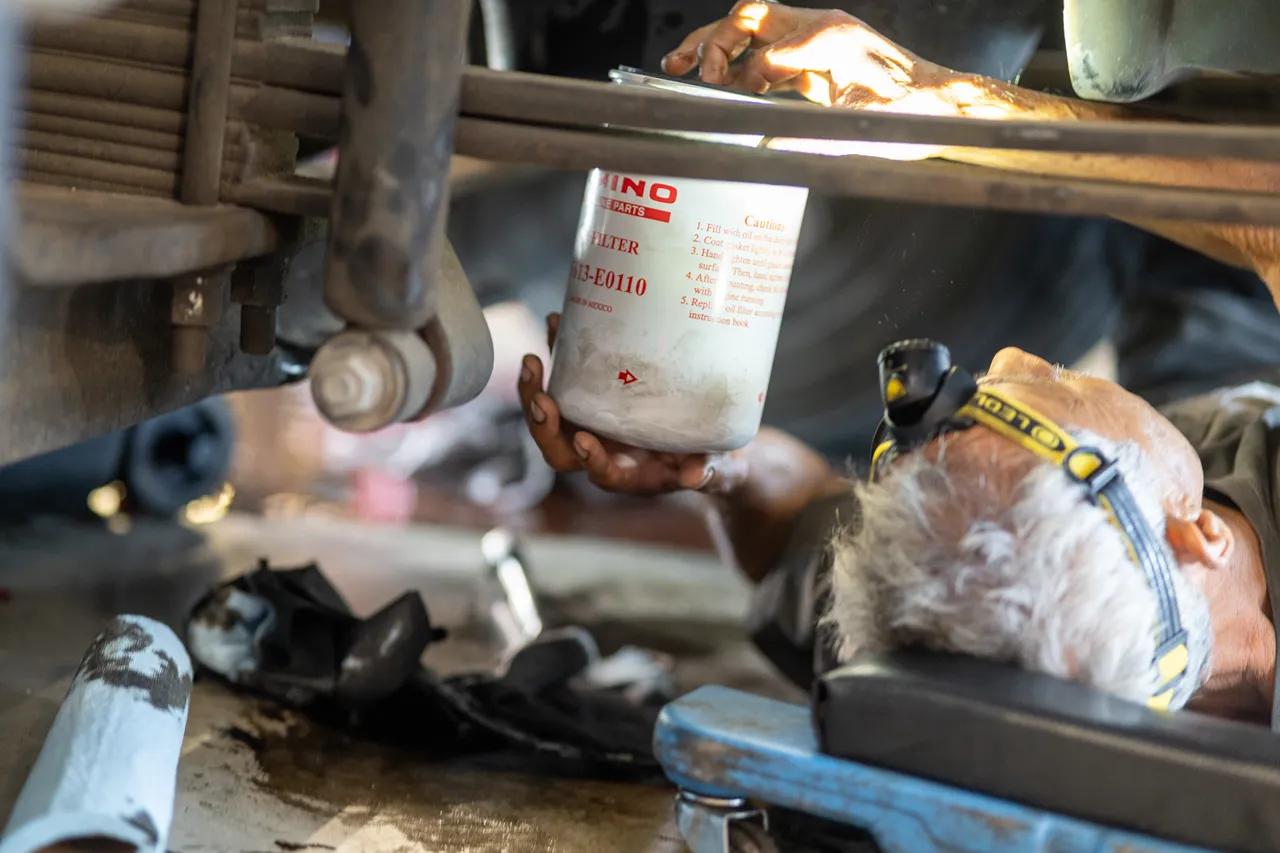
You finish an oil and fuel filter service, fire the truck back up, and expect business as usual. On a modern diesel engine, though, servicing both systems carelessly can create exactly the kind of dry-start condition you were trying to prevent.
For trucks working I-30, I-40, and the Little Rock freight network, filter neglect is only part of the problem. How you service those filters matters too.
A smart maintenance routine protects fuel delivery, restores oil circulation, and gives each system time to stabilize before the truck returns to a demanding route.
Why Does Filter Service Matter More on Modern Diesel Engines?
Modern diesel engines operate with tighter internal tolerances than older engines. That means proper lubrication and fuel supply become especially important immediately after service.
As Nathan from our team at Central Arkansas Truck and Trailer explains in our Tip of the Week video, drivers and owner-operators doing their own maintenance should avoid treating the oil filter and fuel filter as one quick, simultaneous job.
Instead, service one system, restart the truck, and let it run for a few minutes so fluids can circulate again before moving on to the next filter.
That approach helps reduce the chance of creating a dry-start condition in both the lubrication and fuel systems at the same time.
Always follow the engine manufacturer’s exact priming and filter-service procedures, since requirements vary by engine platform.
Why Can Changing the Oil and Fuel Filters Together Create Risk?
An oil-filter change temporarily interrupts normal oil circulation. A fuel-filter change can also introduce air or temporarily interrupt fuel delivery until the system is properly primed.
If both systems have just been opened and serviced, the engine may be trying to re-establish normal oil flow and normal fuel supply at the same time.
That is exactly why service sequence matters.
A practical approach is:
- Change one filter system first
- Follow the manufacturer’s priming and installation procedure
- Restart the engine
- Allow it to run for several minutes
- Confirm normal operation and check for leaks
- Shut the engine down
- Service the second filter system
- Restart and verify operation again
For fleets performing their own preventive maintenance, that extra step can be far more valuable than rushing to save a few minutes.
Watch the Accompanying Filter-Service Tip
Our Tip of the Week on YouTube covers this exact issue.
In the video, Nathan explains why you should avoid changing your oil and fuel filters at the same time on a modern diesel engine. He also explains the importance of restarting the truck and letting fluids circulate before servicing the second system.
The takeaway is simple: modern engines are less forgiving of poor service sequencing, so give each system a chance to restore normal circulation before opening the other.
Where Does Poor Filter Maintenance Hurt Most on I-30?
The I-30 corridor through Benton, Bryant, and Little Rock gives a truck little room to hide a developing fuel-delivery problem.
A truck may seem perfectly acceptable while idling in a yard or moving slowly through a parking lot. Once you merge onto I-30 under load, the engine needs far more consistent fuel flow.
A restricted diesel fuel filter can show up as:
- Sluggish acceleration
- Hesitation under throttle
- Loss of pulling power
- Hard starting
- Surging
- Low fuel-pressure warnings
- Difficulty maintaining highway speed
- Derate or fault-code conditions
That does not automatically mean the fuel filter is the cause. Pumps, injectors, sensors, air intrusion, and contaminated fuel can produce similar symptoms, so diesel engine diagnostics should confirm the problem.
Why Is the I-30/I-40 Interchange Especially Unforgiving?
The I-30/I-40 interchange in North Little Rock combines braking, idling, merging, and hard acceleration.
That operating pattern can expose a partially restricted fuel system quickly. The engine may idle normally in congestion, then struggle the moment the driver asks for full power to merge.
For a heavily loaded tractor, poor throttle response is more than an inconvenience. It can delay deliveries, force an unscheduled stop, or become a roadside-service problem.
The same logic applies after maintenance. If a filter was installed incorrectly, not primed according to the manufacturer’s procedure, or left with a leaking seal, the interchange is exactly the kind of place where the problem may surface.
Why Does I-40 Make Filter Problems More Expensive?
I-40 carries freight east toward Memphis and west toward Conway, Russellville, Fort Smith, and Oklahoma.
Once a truck leaves the Little Rock metro, a small maintenance mistake can become an expensive interruption.
A truck that loses power or develops abnormal oil-pressure symptoms can miss delivery windows and require towing or roadside assistance. The cost of that disruption usually extends well beyond the filter itself.
That is why heavy-duty truck maintenance should focus on preventing roadside failures rather than reacting to them.
How Does Oil-Filter Neglect Increase Engine Wear?
Engine oil does much more than reduce friction. It also carries contaminants, helps manage heat, and supplies pressurized lubrication to critical internal components.
An overdue or incorrect engine oil filter can reduce effective filtration and contribute to poor lubrication conditions.
The filter also cannot compensate forever for degraded oil. Soot, oxidation, coolant contamination, fuel dilution, and excessively extended drain intervals all affect how well the lubrication system protects the engine.
Warning lights, unusual engine noise, or abnormal oil-pressure readings deserve immediate attention.
Why Does August Heat Raise the Stakes?
Central Arkansas summer heat adds another layer of stress.
A truck idling around Little Rock, North Little Rock, the Port of Little Rock, or a congested interstate interchange continues accumulating engine hours even when the odometer hardly moves.
At low speeds, the cooling system also has less natural airflow than it receives during steady highway travel. That makes reliable oil circulation and cooling even more important.
Heat does not directly clog an oil filter, but high temperatures can increase the consequences of poor lubrication, old oil, heavy loads, or overdue service.
Why Should Port and Industrial Fleets Track Engine Hours?
The Port of Little Rock Industrial Park and nearby I-440 operations create a very different maintenance profile from steady over-the-road trucking.
A day cab may spend hours moving between warehouses, docks, staging areas, and interstate ramps while accumulating relatively few miles.
That is why service planning should consider more than mileage alone.
Useful maintenance factors include:
- Odometer mileage
- Engine hours
- Idle percentage
- Load severity
- Fuel quality history
- Operating environment
- Previous filter findings
- Oil-analysis results when appropriate
A truck working around the port can accumulate substantial filter use without ever looking like a high-mileage unit.
What Filter-Service Mistakes Should Fleets Avoid?
Three simple mistakes create many avoidable problems.
Using the Wrong Filter
A filter that physically fits may not meet the correct flow, filtration, bypass, or capacity specification for the engine.
Damaging or Doubling the Gasket
Leaving the old gasket behind or installing a damaged seal can create leaks after restart.
Skipping the Restart and Verification Step
After service, restart the engine according to the manufacturer’s procedure, let fluids circulate, check for leaks, and verify normal operation.
When both oil and fuel filters require service, our YouTube video recommends handling one system at a time rather than opening both simultaneously.
How Can Central Arkansas Fleets Reduce Filter-Related Downtime?
Build filter maintenance around the actual duty cycle of the truck.
A tractor running steady interstate miles has different needs from a port day cab, construction truck, utility vehicle, or regional delivery unit.
Your maintenance plan should account for manufacturer-prescribed intervals, engine hours, idle time, load severity, contamination history, and previous inspection findings.
Most importantly, do not turn routine service into a new problem by rushing the procedure.
Protect Your Truck Before the Next I-30 or I-40 Run
Filter neglect can lead to power loss, contamination, lubrication problems, and roadside downtime. Poor filter-service practices can create additional risk before the truck even leaves the shop.
We recommend following the proper service sequence, allowing fluids to circulate, and paying attention to the tighter tolerances found in modern diesel engines.
Before your truck heads back onto I-30, I-40, I-440, or the Little Rock freight network, make sure its fuel filter maintenance and oil filter service have been completed correctly.
Contact our team at Central Arkansas Truck and Trailer for professional heavy-duty truck maintenance in Central Arkansas. Call us at 501-568-2185 or vist out Contact Page today!
Frequently Asked Questions
Should you change the oil filter and fuel filter at the same time on a modern diesel engine?
Central Arkansas Truck and Trailer recommends servicing one system, restarting the engine, allowing fluids to circulate, and then servicing the other. Always follow the specific priming and service instructions for your engine manufacturer.
Why should the truck run between filter changes?
Running the engine allows normal fluid circulation to re-establish before the second system is opened. This helps avoid placing both the fuel and lubrication systems in a post-service condition at the same time.
Can a clogged fuel filter cause power loss on the interstate?
Yes. Restricted fuel flow can cause hesitation, sluggish acceleration, low fuel-pressure warnings, and reduced power under load. Other fuel-system problems can cause similar symptoms, so diagnosis matters.
Should fleet maintenance be based only on mileage?
No. Engine hours, idle percentage, load severity, operating conditions, contamination history, and manufacturer recommendations can all affect maintenance needs.
Why are modern diesel engines less forgiving of maintenance mistakes?
Modern diesel engines generally operate with tighter component tolerances and sophisticated high-pressure fuel and lubrication systems. Proper service procedures, correct filters, and reliable fluid circulation are therefore especially important.

.webp)
.webp)

%20(1).webp)

.jpg)
.jpg)
.webp)
.jpg)

Don't Take our word for it.
Read Customer Testimonials.
Nathan Dunn helped me go through the process of ntp warranty The service was well taken care of and all my needs were fulfilled by the professional staff. Thank you
The guys here were amazing! They got me in quick and were upfront and honest about what needed to be done. I mentioned basically going to get a second opinion and they said go ahead and they’d beat that price. Everything was top notch, the work, the facilities and amenities, the people and the overall experience.
Best shop in Little Rock! They work hard to meet my demands and never disappoint. Fair price for great work. The bill is always less than I expect.
"Excellent service! They were able to get us in, RV problem diagnosed and fixed and we were back on the road in about four hours. Nathan, David, Travis and Dillon all worked diligently to do everything possible to resolve our issue and keep our trip and travels on track. Happy campers!"
"In and out Def Derate 4 hrs. Great shop that gets the job done. No fuss no hassle... Gave me 8hr quote (injector issue) came in way under. Definitely a pleasure"
"My alternate belt was broken and truck start loosing voltage rapidly. I called many local shops to change asap but no one was available to fix it quick because I was getting late to delivery so I got only 2,5 hours room for delivery. I called in and owner said come in . Took right away to shop and get done in 1 hour. Now I got 1,5 hours room for delivery. Thank you so much guys"